How AI will bring back to joy of practicing medicine
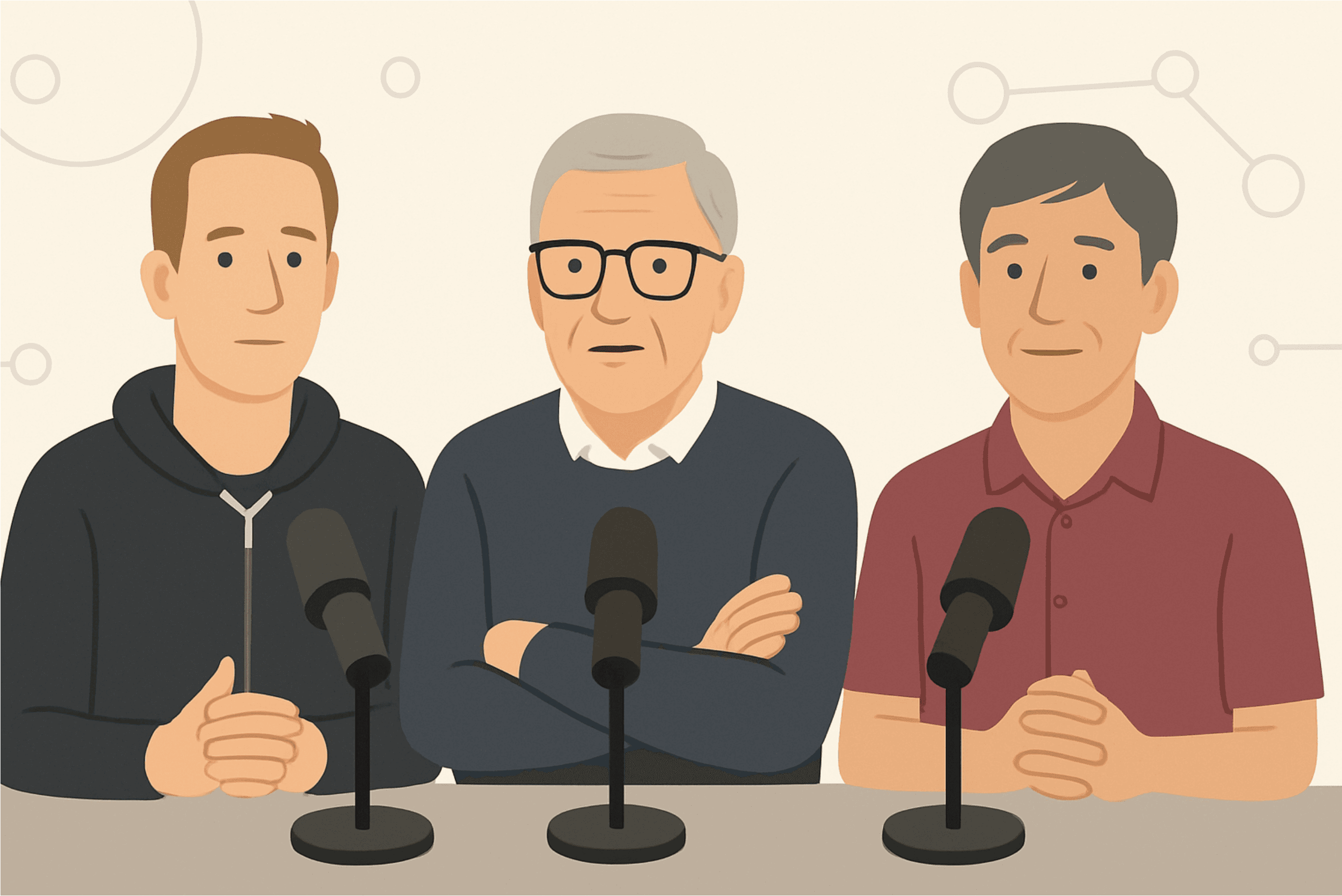
Imagine walking into a doctor’s office where artificial intelligence listens in—not to replace the doctor, but to support them, summarize the visit, and maybe even catch something they missed. That’s not science fiction anymore. In a recent episode of the Microsoft Research Podcast- we listen for you - Peter Lee sat down with Bill Gates and OpenAI’s Sébastien Bubeck to discuss how generative AI is already transforming healthcare. And the surprising truth? It's happening faster—and in stranger ways—than most experts predicted.
Doctors today are quietly relying on AI tools like GPT-4 to help them draft medical notes, suggest diagnoses, and manage communication with patients. What began as a hypothetical—an emergency room resident checking AI for help in a crisis—is becoming everyday reality. Yet the tech's full potential remains untapped, often stalled not by limitations of the AI, but by the difficulty of integrating it into clinical workflows. Tools that outperform doctors in diagnostic tests are still held back by clunky interfaces and the challenge of training busy professionals to use them well.
One of the most revealing studies discussed in the podcast showed that ChatGPT alone achieved 90% diagnostic accuracy—higher than physicians on their own. But when doctors used ChatGPT, their performance decreased to 80%. That counterintuitive result speaks volumes: intelligence is not enough. Usability, timing, and trust matter just as much. The way we present AI in medicine may determine whether it helps—or hinders—human performance.
While high-income countries experiment cautiously with AI, lower-income countries may leap ahead. As Gates pointed out, in places where people often have no access to medical care at all, an AI chatbot trained in local languages and disease profiles can make a life-saving difference. What seems experimental in New York could be essential in Nairobi. The Gates Foundation is already funding AI pilots in areas like maternal health and infectious disease support. In these settings, AI isn’t replacing doctors—it’s stepping in where no doctors are available.
A big challenge ahead is evaluation. Tests like the U.S. Medical Licensing Exam (USMLE) are great for human doctors but poorly suited to assessing AI. Recognizing this, both Microsoft and OpenAI have released new evaluation frameworks—HealthBench and ADeLe—that assess AI performance in real-world medical tasks, from patient triage to clinical reasoning. These tools shift the focus from "Can it answer a question?" to "Can it actually help in practice?"
Another major theme was multimodal AI—systems that don’t just read and write but also see, hear, and analyze biological data. From medical imaging to molecular modeling, AI is starting to process complex health data across multiple formats. In fields like radiology or drug discovery, this could lead to breakthroughs not only in speed, but in quality and insight. Bubeck believes we’re already seeing early signs of AI producing scientific results humans hadn’t yet reached.
Still, there’s work to do. AI can sound smart, but it doesn’t always act like a good doctor. It may hesitate to challenge a human user, or fail to understand the tone needed in a sensitive context. That’s why reinforcement learning with human feedback (RLHF) is still crucial. Developers are now teaching AI not just facts, but professional behaviors—how to speak up when something’s wrong, when to stay quiet, and how to adapt its tone based on context. In clinical care, the stakes are too high for anything less.
So will AI replace doctors? Both Gates and Bubeck say no—but it will change medicine as we know it. In the short term, AI will be a powerful copilot, assisting with documentation, follow-ups, and even late-night mental health check-ins. In the long term, AI could enable health systems that are far more efficient, accessible, and personalized. Gates even predicts that voters in countries with universal healthcare may one day re-elect leaders simply for implementing effective AI-driven care—because the improvement in experience will be that dramatic.
Perhaps the most powerful idea discussed was the future of "patients like me" medicine. Imagine feeding a patient’s symptoms, lab data, and history into an AI system that has access to millions of other cases. It could instantly compare outcomes, suggest likely diagnoses, and recommend what treatments worked best for similar people. That future—personalized, data-rich, and powered by AI—is no longer theoretical. It’s coming, and it could redefine not just how we treat illness, but how we understand health itself.